How do you dress for trail riding when very cold conditions are forecast?
To ensure that your winter trail run or long outing in the cold is a success, there are a few simple rules to keep in mind:
- Heat loss generally occurs through the extremities (feet, hands and especially the head).
- The body continues to perspire even when it's cold, especially if you exert yourself hard or if your clothing doesn't wick away perspiration sufficiently. It is essential to avoid getting wet through perspiration, as this can lead to rapid heat loss.
- Wind protection is essential to prevent convective heat loss.
- Muscles need heat to function properly.
- Keeping the body warm requires more energy than keeping it cool.
Choice of equipment
For your cold-weather outing, take the following items with you:
Use the famous onion technique: multiply layers with at least 3 layers
- The layer next to the skin with a fabric that wicks away perspiration, such as a synthetic fabric or long-sleeved merino wool if temperatures are very cold,
- The insulating, breathable middle layer, such as a lightweight jacket or fleece,
- A waterproof, breathable outer layer to protect against wind and rain or snow, such as a windproof jacket or even a gore-tex jacket in case of extreme cold or precipitation.
Protect your extremities
- Hands with waterproof technical gloves or 2 pairs stacked on top of each other (onion technique for hands)
- Feet with thick socks, or even waterproof socks if wet conditions are forecast, to keep feet dry and warm. Trail shoes with good grip are generally essential.
- The head with a cap or buff. A neck warmer can also be useful in truly wintry conditions.
Don't forget a few accessories that can be useful depending on the conditions.
- Gaiters to prevent mud or snow from slipping into your shoes, and Yaktrax-type shoe chains or equivalent to prevent slipping in snowy or icy conditions.
- Sunglasses and sun cream to protect you from the sun, especially when out in the mountains or on the snow.
- Food and water are essential for adapting to cold conditions. The cold can sometimes distort the sensation of thirst.
Of course, these rules need to be adapted to each individual's reaction to the cold. Some will need to wear 4 layers, while others will be comfortable with 2.
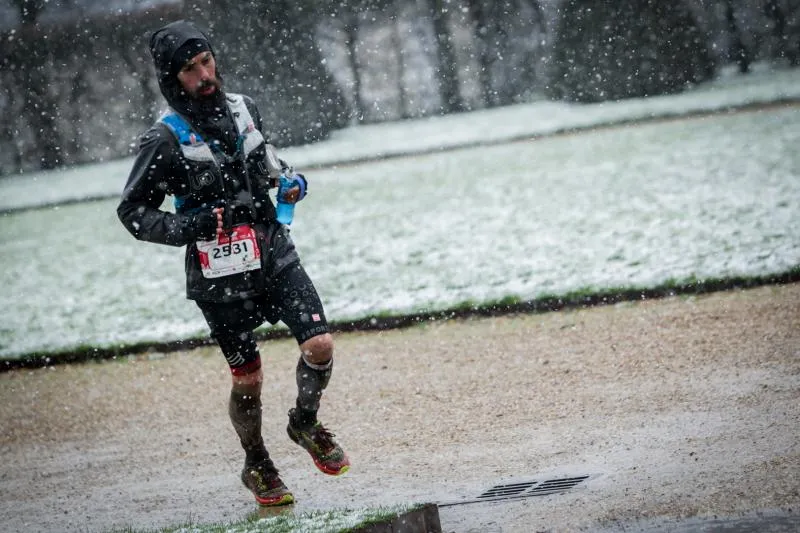
Hardware testing
Testing your rain and cold weather gear before taking part in a trail race is important for a number of crucial reasons relating to safety, comfort and performance.
Here are a few reasons why this testing step is essential:
Personal safety
Weather conditions can be unpredictable, especially when trail running can take place over long distances and in varied environments. Reliable rain and cold gear keeps you safe by protecting you from the elements, reducing the risk of hypothermia, frostbite and other problems associated with extreme weather conditions.
The right equipment starts at the starting SAS and the associated waiting time. If it's cold, it's of course essential to take more time to warm up so that your muscles are at the right temperature and your joints are well prepared for the effort, but it's also preferable to stay warm under a big pncho (which can then be folded up into your bag) than to fight the cold even before the start, or even start off soaking wet. Participants in the 2018 edition of the EcoTrail Paris were confronted with an episode of extreme cold. Some, not having tested their extreme-cold gear, had the bitter experience.
A survival blanket has simple instructions, which are important to know. To cut to the chase, in the event of hypothermia: put the golden side out.
Comfort and performance optimization
The right equipment improves your comfort during the race. This equipment must be tested. Running in the rain or in cold temperatures without the right protection can make the experience extremely uncomfortable, affecting your concentration, morale and possibly your performance.
Weather-appropriate clothing and equipment can help maintain your energy levels and physical efficiency. Running in wet, cold clothing can lead to a loss of body heat, which can adversely affect your performance.
Testing your equipment before a trail run gives you the opportunity to familiarize yourself with its use, make adjustments and ensure that it meets your specific needs. It also prevents you from discovering potential problems during the actual race. Training is also a good time to test your trail bag's storage and ease of use. It's important to be able to change clothes in your trail bag, and just as important to keep it dry. Storing it in an airtight bag is essential to protect it from rain and sweat. It's also often a good idea to wear a rain jacket over your trail bag. This not only keeps the bag dry, but also facilitates use and removal of the jacket.
Prevention
Running in adverse weather conditions without suitable equipment can increase the risk of injury. For example, running in shoes that are insufficiently permeable to rain can cause blisters, and prolonged exposure to the cold without appropriate clothing can lead to health problems. Digestive discomfort is also greater in periods of extreme cold, so it's important to find your own bearings to combat this. Very cold water disrupts digestion, which is already difficult when running. For example, it's a good idea to warm up cold water by holding it in your mouth for a few seconds before drinking. If it's cold, it's also essential to take extra time to warm up, so that your muscles are at the right temperature and your joints are well prepared for the effort.
In short, testing your rain and cold weather gear before a trail run is a crucial step in ensuring your safety, improving your comfort, preventing injury and optimizing your performance in difficult weather conditions.